


Sustainability in print products
Sustainability starts with the product idea. We match paper, printing and finishing to the intended use, considering circularity, fibre origin, recycling and climate protection, and clarifying the appropriate supporting evidence for your project.

Cradle to Cradle: Designing materials for circularity
Cradle to Cradle considers products as part of a circular system from the design stage. After use, materials should be able to serve as raw materials again within a suitable biological or technical cycle.
For print products, this involves more than paper. Inks, varnishes, adhesives and binding are also part of the assessment. What matters is how these components work together and the planned route for their next use.
Would you like a Cradle to Cradle certified specification? Contact us before the design is finalised wherever possible, so material selection, finishing and required documentation can be coordinated early.
FSC, Blue Angel and financial climate contribution
FSC and Blue Angel address the characteristics and sourcing of materials or printed products. A financial climate contribution refers to funding climate projects. Each requires appropriate supporting evidence.
FSC
FSC labels wood and paper products according to the origin of their fibres. FSC Mix combines certified and/or recycled materials with controlled sources; FSC Recycled identifies recycled material. We clarify which paper specification and labelling are appropriate for your order before production.
FSC labels explained (opens in a new tab)Blue Angel
Recycled papers carrying the Blue Angel label are made from 100% recovered paper. Separate criteria apply to finished printed products, including the substances used, emissions and recyclability. We therefore assess paper and the finished product separately and agree the desired specification early.
Criteria for printed products (opens in a new tab)Financial climate contribution
A financial climate contribution supports climate projects outside a company’s own production. It complements efforts to avoid and reduce emissions but does not replace them. Emissions from paper manufacturing, printing and transport remain. Transparent communication requires information about the contribution amount, the project supported and the relevant supporting evidence.
Certification must apply to the print product
Certified paper does not automatically make the finished print product certified. The specification covered, certification scope and validity of the supporting evidence are decisive. We clarify these details for your specific order.
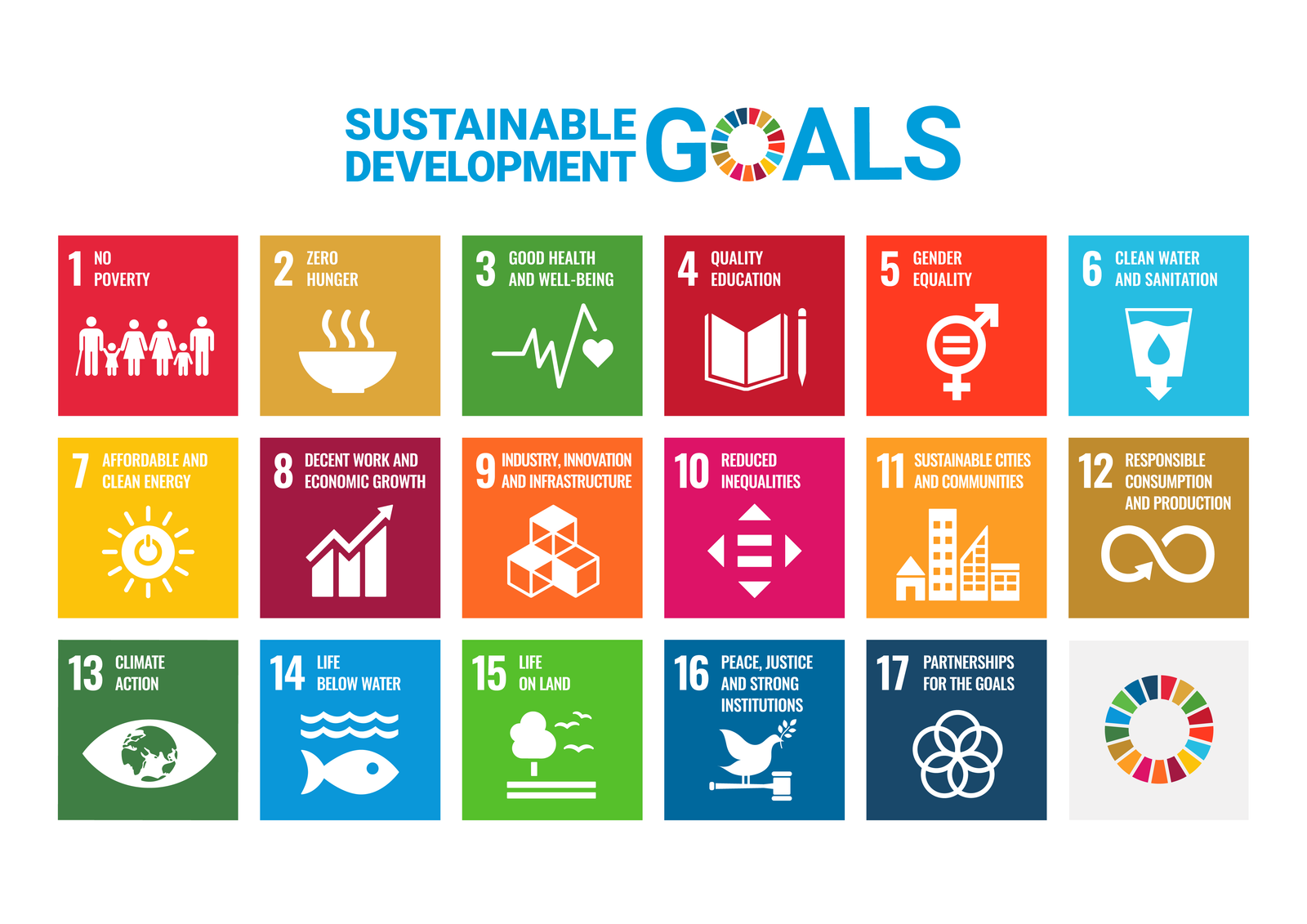
Source: United Nations. This website’s content has not been approved by the UN and does not represent the views of the UN, its officials or Member States.
17 goals. One shared framework.
The United Nations’ Sustainable Development Goals bring together environmental, social and economic objectives. Two goals in particular provide practical starting points for print products:
Goal 12: use resources responsibly
Match quantities to demand, consider recycled papers and plan for recovery after use.
Goal 13: consider climate protection
Consider materials, production and transport together and reduce avoidable emissions.
What this means for your print project
Paper, printing and finishing are planned together. We consider the desired effect alongside the product’s intended use and eventual recovery.
Choose paper carefully
Recycled content, fibre origin, surface and weight are matched to use and legibility. A long-lasting catalogue has different requirements from a promotional card.
Include inks, varnishes and adhesives
Inks, varnishes and adhesives are part of the finished product. For a certified specification, the entire combination of materials must meet the relevant standard.
Coordinate binding and embellishment
Foils, coatings and binding affect later recovery. We discuss the desired effect and assess suitable material combinations.
Plan appropriate quantities and distribution
Print runs, content lifespan, partial call-offs and shipping are planned together to help avoid excess quantities and unused stock.

Plan sustainable print products together
Whether you are planning a brochure, catalogue or mailing, tell us the product, quantity and deadline. We will coordinate materials, finishing and the sustainability evidence you require.

Have specific materials or certifications in mind? Talk to us.